
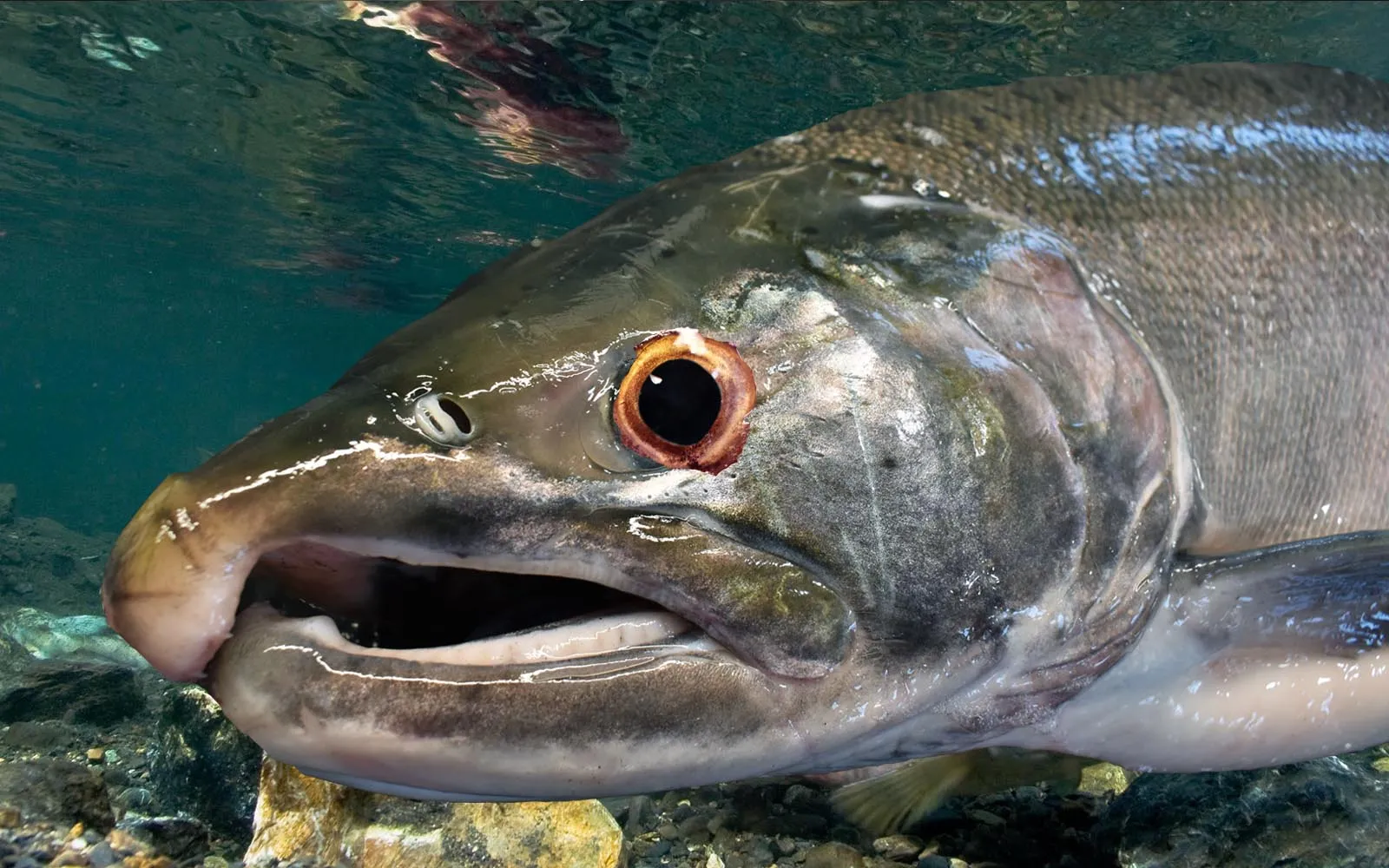
It Took A Study To Show Scientists That Salmon Perform Better on Cocaine
In a recent example of how human pharmaceutical and illicit drug pollution can reshape natural ecosystems, researchers have discovered that cocaine and its primary metabolite can significantly change how young Atlantic salmon move through their environment. The findings, published this month in the journal Current Biology, mark the first time such effects have been documented in the wild rather than in laboratory settings.
The study focused on Lake Vättern, Sweden’s second-largest lake, a vast natural ecosystem spanning nearly 1,912 square kilometers. Scientists from Griffith University in Australia, the Swedish University of Agricultural Sciences, and collaborating institutions fitted 105 hatchery-reared juvenile Atlantic salmon (Salmo salar) with slow-release chemical implants and acoustic telemetry tags. One group received environmentally realistic doses of cocaine, another received benzoylecgonine (cocaine’s main breakdown product, commonly found in wastewater), and a control group received none. The fish were then released into the lake and tracked for approximately eight weeks.
The results were clear and surprising. Salmon exposed to benzoylecgonine—the metabolite that persists longer in waterways—swam up to 1.9 times farther per week than unexposed fish. By the end of the experiment, these “coked-up” salmon had dispersed up to 12.3 kilometers (about 7.6 miles) farther from their release point compared to controls. Cocaine itself produced weaker or less consistent effects, highlighting the metabolite’s outsized influence.
Lead researcher Dr. Jack Brand and colleagues noted that the behavioral changes became more pronounced over time. While all fish initially explored the lake, the benzoylecgonine-exposed group remained more active and ventured farther into northern sections of the lake as the study progressed. The researchers suspect the substances interact with conserved neurological pathways in fish brains, much like they do in humans, disrupting normal movement patterns.
Why This Matters for Aquatic Life
Cocaine and benzoylecgonine enter rivers and lakes through incomplete removal during wastewater treatment. These pollutants are now widespread in freshwater systems worldwide. Because fish share similar dopamine-related brain chemistry with humans, even low-level exposure can trigger behavioral shifts.
Altered movement could have cascading consequences:
- Habitat use and feeding: Fish may spend more time in suboptimal areas or miss key food sources.
- Predator avoidance: Increased activity might make them more visible to predators.
- Population dynamics: Wider dispersal could affect migration success, breeding, and overall population structure.
The study’s authors emphasize that exposure levels mirrored those found in real polluted waterways, but the fish were not destined for human consumption—ruling out any direct food-safety concerns.
Broader Implications of Pharmaceutical Pollution
This research adds to growing evidence that “emerging contaminants” like pharmaceuticals, personal-care products, and illicit drugs are quietly reshaping wildlife behavior. Similar studies have shown antidepressants, caffeine, and other compounds altering everything from fish boldness to shark activity. The salmon findings underscore the urgent need for improved wastewater treatment technologies and stricter regulations on chemical pollutants.
As co-author Dr. Michael Bertram put it, understanding these subtle ecological disruptions is critical for conserving species already facing pressures from climate change, habitat loss, and overfishing.
The “salmon on cocaine” headline may sound like a punchline, but the science reveals a serious environmental story: our drug habits don’t stop at the sewer pipe—they ripple through entire ecosystems.
Sources
- Brand, J.A. et al. (2026). “Cocaine pollution alters the movement and space use of Atlantic salmon (Salmo salar) in a large natural lake.” Current Biology. https://www.cell.com/current-biology/fulltext/S0960-9822(26)00315-5
- Science Magazine: “Cocaine pollution gives salmon wanderlust.” https://www.science.org/content/article/cocaine-pollution-gives-salmon-wanderlust
- Phys.org: “Cocaine pollution alters salmon behavior in the wild.” https://phys.org/news/2026-04-cocaine-pollution-salmon-behavior-wild.html
- The Guardian: “Cocaine pollution in rivers and lakes may disrupt behaviour of salmon.” https://www.theguardian.com/science/2026/apr/20/cocaine-pollution-may-disrupt-behaviour-of-salmon-study-suggests
- Scientific American: “The strange way cocaine water pollution is changing salmon.” https://www.scientificamerican.com/article/the-strange-way-cocaine-water-pollution-is-changing-salmon/
- Swedish University of Agricultural Sciences press release: https://www.slu.se/en/news/2026/04/cocaine-pollution-alters-salmon-movement-in-the-wild/
- Michael Bertram Lab: Full study summary and PDF. https://www.michaelbertramlab.org/news/cocaine-pollution-and-salmon-behaviour-paper-in-current-biology