Supreme Court Narrows Federal Gun Ban for Marijuana Users in Unanimous Ruling
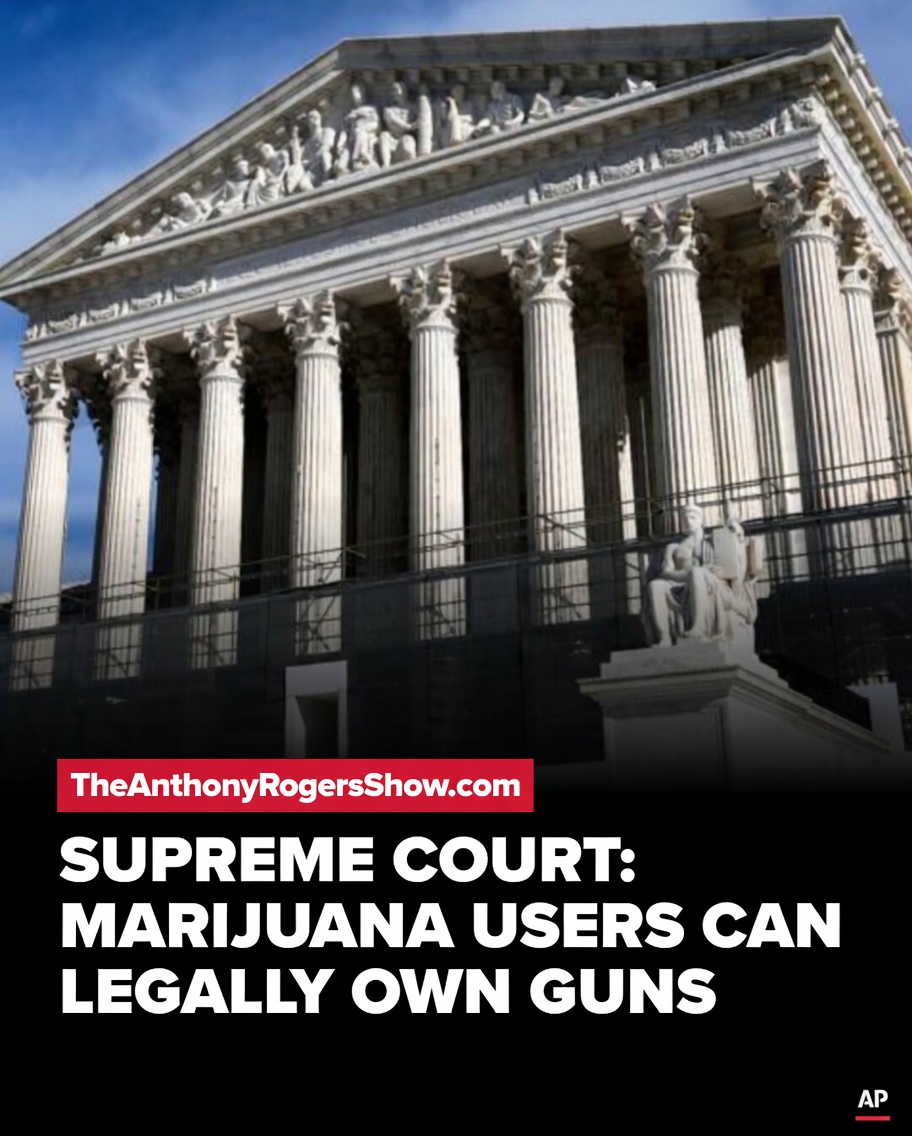
In a landmark 9-0 decision issued on June 18, 2026, the U.S. Supreme Court ruled that the federal government cannot automatically prosecute individuals for possessing firearms solely based on their regular marijuana use, holding that such application of the law violates the Second Amendment.
Case Background
The case, United States v. Hemani (No. 24-1234), centered on Ali Danial Hemani, a Texas resident and dual U.S.-Pakistan citizen. During an FBI search of his family home in 2022, agents discovered a Glock 9mm pistol and marijuana. Hemani cooperated, surrendering the gun and admitting he used marijuana approximately every other day.
Months later, prosecutors charged him under 18 U.S.C. §922(g)(3), part of the federal Gun Control Act. This provision makes it a felony—punishable by up to 15 years in prison—for anyone who is an “unlawful user of or addicted to” a controlled substance to possess a firearm. Marijuana remains a controlled substance under federal law, despite legalization in many states and recent rescheduling efforts.
Lower courts dismissed the charges, finding the prosecution unconstitutional as applied to Hemani. The government appealed to the Supreme Court.
The Court’s Decision
Justice Neil Gorsuch wrote the majority opinion, joined by Chief Justice Roberts and Justices Thomas, Sotomayor, Kavanaugh, Barrett, and Jackson. The Court affirmed the lower courts’ rulings, concluding that applying §922(g)(3) to Hemani is inconsistent with the Second Amendment.
Under the framework established in New York State Rifle & Pistol Association v. Bruen (2022), the government must demonstrate that its regulation is “consistent with the Nation’s historical tradition of firearm regulation.” The justices found the government failed this test.
Key Reasoning:
- Historical Analogues Insufficient: The government pointed to early American “habitual drunkard” laws (vagrancy, civil commitment, and surety statutes). However, these targeted individuals whose alcohol use rendered them severely incapacitated—unable to manage their affairs or function in society—not mere regular users. They also typically involved judicial proceedings, unlike the automatic ban under §922(g)(3).
- Purpose and Operation: Historical laws focused on protecting society from demonstrably dangerous or incapacitated people, often with individualized findings. In contrast, the federal statute imposes a blanket prohibition based on status as a drug user, without requiring proof of intoxication or danger at the time of possession.
- Modern Context: The Court noted marijuana’s widespread acceptance, state legalizations, and federal regulatory shifts, underscoring that millions of Americans could not be categorically deemed “dangerous” simply for regular use.
The opinion stressed that the ruling is narrow. It does not strike down the entire statute, address bans on addicts or currently intoxicated individuals, or affect other prohibitions (such as for felons). It leaves open the possibility of prosecutions with individualized evidence of danger.
Concurrences
- Justice Thomas concurred, emphasizing limits on the government’s power.
- Justice Jackson (joined by Sotomayor) wrote separately.
- Justice Alito (joined by Kagan) concurred in the judgment, offering additional views on the scope.
Implications
The decision provides relief to lawful gun owners who use marijuana casually or regularly, particularly in states where it is legal. It aligns with shifting national attitudes toward cannabis but preserves core federal restrictions on firearms for those who pose demonstrated risks. Legal experts anticipate it could impact thousands of cases and influence enforcement priorities.
This ruling underscores the Court’s ongoing emphasis on historical tradition in Second Amendment cases following Bruen. For the full text, see the official opinion on the Supreme Court’s website.